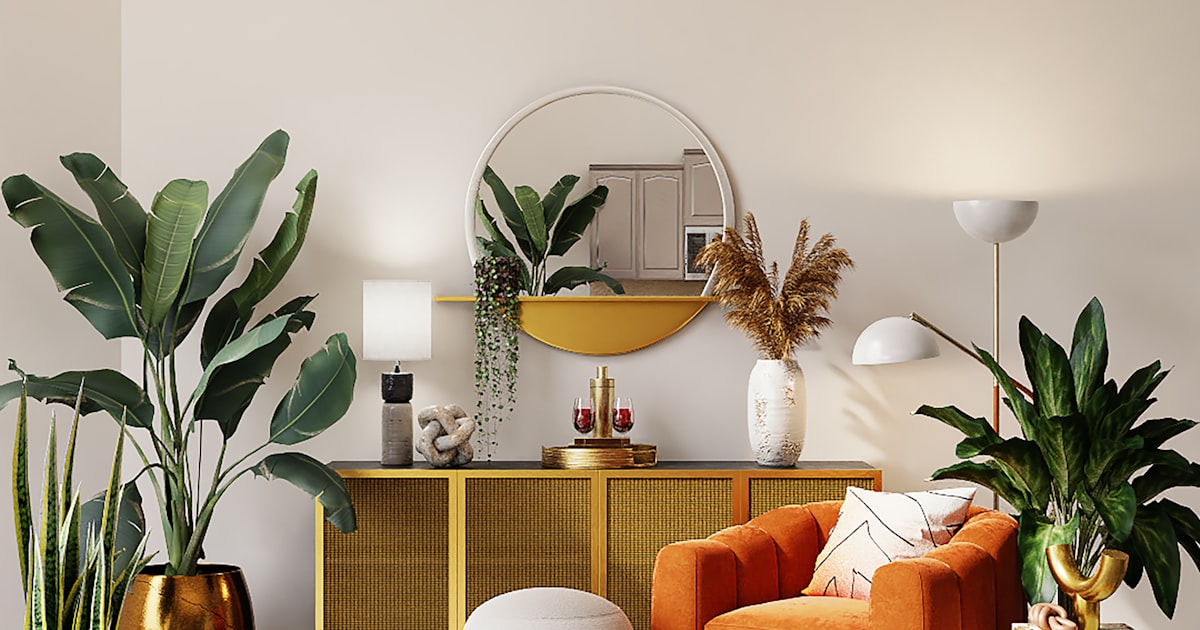
Plants are the easiest feng shui change most people get wrong, because they focus on which plant to buy instead of where it goes. A healthy pothos in the right spot beats an expensive fiddle leaf fig in the wrong one every time.
The Best Plants for Each Room
Bedroom
Keep your bedroom simple. One or two broad-leafed plants near a window is ideal. Pothos, peace lily, or snake plant are your best bets. These plants purify air and thrive in lower light, so they work in bedrooms that do not get much sun. They do not demand constant attention, which is exactly what you want in a room dedicated to rest.
Do not overcrowd your bedroom with plants. The bedroom is a yin space, meaning it should feel calm and receptive. Too many plants push it toward yang energy, which is active and stimulating. That works against what you are trying to accomplish at night. Two healthy plants, maybe three if your room is large, is the maximum. Place them where you can see them when you are lying in bed, but not so close to your head that they feel intrusive.
A peace lily on a dresser or nightstand works well. A pothos on a shelf across the room creates visual balance without overwhelming the space. If you have a dark corner near the window, that is an ideal spot for a snake plant or peace lily. You want the plants to feel like part of the room, not like they took over.
Living Room
This is where you can go bigger and bolder. Your living room is an active space, a yang space, where energy should move and people should interact. Larger, more vibrant plants match that energy. Monstera, rubber plant, and fiddle leaf fig are excellent choices. These plants have presence. They take up visual space and demand a little attention, which is appropriate for a room where people gather.
Place large plants in corners that feel empty or dead. Most living rooms have a corner that just sits there, maybe with an end table or nothing at all. That is where your statement plant belongs. A six-foot monstera in a dark corner transforms it completely. Suddenly that corner has character and life.
You can also place plants on either side of a sofa, flanking the main seating area. This creates symmetry and balance. It also frames the space where you actually sit and spend time, which reinforces that this is an intentional, designed area, not just a random collection of furniture.
Home Office
A plant on or near your desk is essential for focus. You do not need something large and dramatic here. Small pothos, ZZ plant, or snake plant work perfectly. Place it where you can see it from your seated position, ideally in your peripheral vision.
The reason is ordinary rather than mystical. A screen holds your eyes at one distance for hours at a time. Something living, a little further away and off to one side, gives them somewhere else to land for a moment. Call that rest for your eyes or just a change of scene, the practical result is the same: a desk with a plant near it is a less relentless place to work than a desk without one.
If your desk faces a wall, place a small trailing plant on a shelf or stand at eye level. If your desk faces into the room, place a plant on the corner of the desk itself or on a small stand beside it. The key is sight line. You should be able to glance at it without turning your head.
Plants to Avoid (And Why)
Cacti and succulents with sharp spines create what feng shui calls "poison arrows." That phrase sounds dramatic, but here is what it actually means: your brain registers sharp points in your peripheral vision as mild threats. Your nervous system is wired to notice pointed objects because they could be dangerous. A cactus sitting on your windowsill is constantly registering as a low-level threat, even if you do not consciously notice it.
If you love cacti and succulents, that is fine, but understand what they are doing to your space. Place them where you are not looking at them constantly. A windowsill in a corner is better than a nightstand where your eyes land every morning. Or choose succulents without dramatic spines, like echeveria, which have softer edges.
Dead or dying plants are worse than no plants at all. A struggling plant tells your brain that this space is neglected. It is dying. Energy is draining out of this room. If you bring a plant into your home and it starts to struggle, either revive it immediately by changing its location or light, or remove it. Do not let it languish. That defeats the entire purpose.
Fake plants are neutral. They do not harm your space, but they do not help it either. A fake plant does nothing for air quality. It does not give you that visceral sense of tending a living thing. It does not signal growth and vitality the way a real plant does. If you cannot commit to a real plant, skip it rather than settling for fake.
Where Placement Matters More Than Species
A healthy pothos in the right spot beats an expensive fiddle leaf fig in the wrong one. This cannot be overstated because most people get it backward. They see a beautiful plant and buy it because it looks good at the nursery, then bring it home and shove it into the first available space. That plant becomes a burden because it is in the wrong place.
Start with placement. Look at your room. Where is the dead energy? Where do you feel a void? That is where the plant belongs. Then choose a plant that will thrive in that location. If the spot gets low light, pothos or peace lily. If it gets bright indirect light, monstera or rubber plant. Work with your space, not against it.
Put plants where energy stagnates: empty corners, beside heavy furniture, near electronics. An empty corner behind a chair feels neglected. A space beside a bulky dresser or dresser feels blocked. These are places where the eye does not naturally land and where energy just sits. A plant here creates a focal point and breaks up the stagnation.
Avoid placing tall plants between you and the door. This blocks your sightline into and out of the room, and it creates a subconscious barrier. You want clear visual pathways. You want to be able to see the door from your main seating position or from your bed. A tall plant in the way undermines that sense of openness.
The Jade Plant and Money Tree
You have probably seen these trending on social media: jade plant for prosperity, money tree for abundance. Traditionally, these plants are associated with wealth and good fortune in feng shui. The jade plant's round leaves represent coins in traditional symbolism. The money tree is said to activate prosperity energy.
Practically, what matters more is this: these are easy-care plants that work well on desks and in bright corners. A jade plant on your office desk reminds you every day that you are building something. It is hardy and thrives with minimal attention. A money tree in a bright corner of your living room creates presence and visual interest.
The prosperity association is not wrong, but here is the real feng shui principle: prosperity comes from tending what you have. A healthy, thriving jade plant on your desk sends a signal to your brain that you are capable of nurturing something. That sense of agency and care extends into your work and your financial life. You are not attracting money through mystical plant energy. You are building a relationship with growth and care.
Choose these plants if they appeal to you and if your light conditions suit them. Place them where you will see them regularly and where they will thrive. That is all you need to know.
Your Room Has More Problems Than Plants Can Fix
Plants are one piece of the puzzle. Your bedroom layout is the rest. A plant in the right corner makes a difference, but if your bed is positioned where you have your back to the door, or if your furniture is arranged in a way that creates dead zones and blocks energy flow, the plants alone cannot fix it.
The real transformation happens when you combine plants with intentional layout. Remove the clutter, arrange your furniture to support the function of the room, and then place plants strategically. That is when a bedroom or living room truly shifts from feeling off to feeling right.
Your plant choices matter less than your commitment to seeing your space clearly and placing things intentionally. Start there, and the rest follows.
See this for your own address
Once your plants are placed, the layout underneath them is what actually carries the room. See what your house's facing direction adds to the picture. Enter your address, free.
Frequently asked questions
Which plants are best for a home?
The ones that survive where you intend to put them. A healthy common plant in the right spot does more than a recommended species that struggles in low light. Rounded and soft leaved plants suit rooms you rest in, and upright plants suit rooms you work in.
Are there plants I should avoid?
Avoid spiky and sharply pointed plants right beside where people sit or sleep, since the point is comfort at close range rather than the plant being harmful. Beyond that, the plant to avoid is any plant you will not keep alive, because a dying plant in a corner is worse than an empty corner.
Does a money tree or a jade plant actually attract money?
No, and nothing in your home will. They are pleasant, hardy plants with a long association with prosperity, and that association is cultural rather than causal. Keep one because you like it.
Where should plants go?
Where a room feels bare, hard or unfinished: an empty corner, a run of hard surfaces, or a spot with nothing at eye level. Placement is doing more of the work than species selection, which is the opposite of how most plant advice is written.
Can plants fix a badly arranged room?
No. Plants soften a room and they do not move a bed, open a sightline, or add support behind your head. Get the layout right first, then use plants on what is left over.