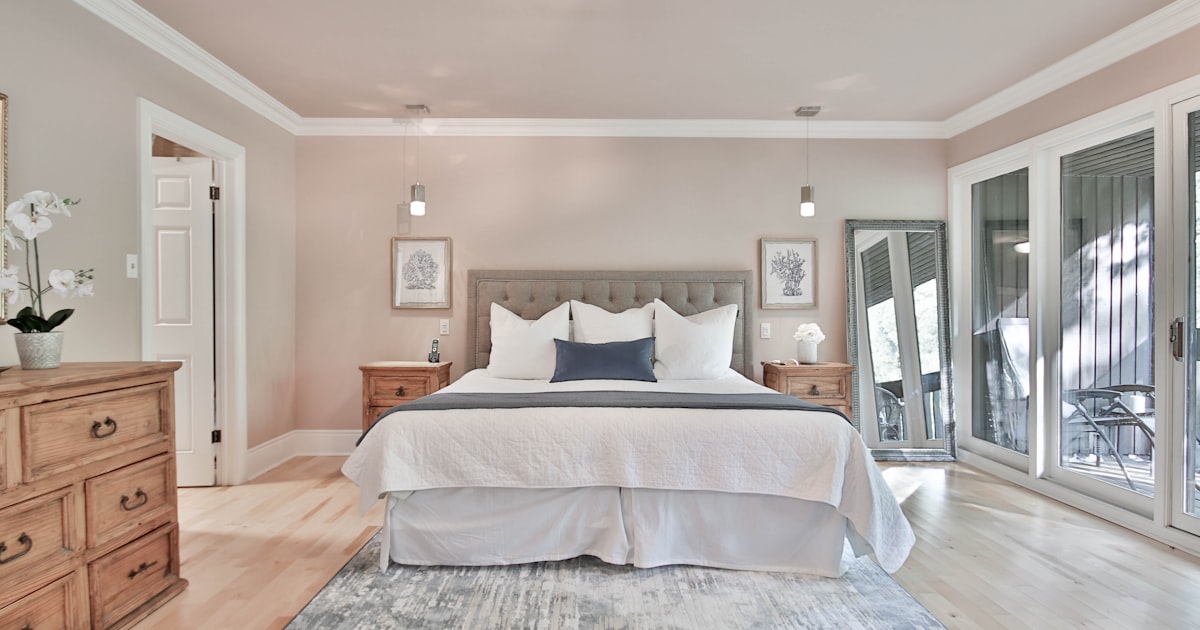
A small bedroom does not need less feng shui, it needs the right priority order. Solid wall behind the headboard first, always. Keep the bed accessible second. Avoid the coffin position third. Seeing the door from bed is the one that most often has to give, and that is fine.
Stop Trying to Follow Every Rule
Here is the thing nobody tells you: feng shui is not a checklist. It is a set of priorities. And when your room is small, you cannot have everything. That is fine. The goal is not perfection. The goal is the best possible arrangement for your specific space.
When you cannot have it all, here is the order that matters most:
Solid wall behind your headboard. This is always the top priority, regardless of room size. Your brain needs that sense of protection while you sleep. If you only get one thing right, make it this.
Keep the bed accessible and uncrammed. A bed that is squeezed in so tightly you can barely get to it defeats the purpose of having a restful space. You need some breathing room, even if it is just a foot or two on one side.
Do not point your feet at the door. If you can avoid the coffin position, do. If you cannot, place something at the foot of the bed to break the direct line.
Try to see the door from the bed. This is the one that often has to give in a small room. If you cannot get a view of the door, a small mirror on the opposite wall can help. But this is lower priority than the first three.
Bed Placement in Tight Spaces
In a small bedroom, where you put the bed is basically the entire game. Everything else flows from that decision.
Start by identifying your solid walls. Windows, closet doors, and room doors are not solid walls. Once you know which walls qualify, you usually have one or two realistic options.
If the only solid wall puts your feet toward the door, try shifting the bed slightly off-center so you are not directly in line with the doorway. Even six inches can make a difference. If that still does not work, a small bench, a stack of books, or a low dresser at the foot of the bed creates a buffer.
In rooms where the bed can only go in one corner, that is okay too. Use a wide headboard that extends to the wall on both sides of the bed. This makes the bed feel anchored and intentional, not like it was shoved into a corner out of desperation.
The Corner Bed: When It Works and When It Does Not
Pushing a bed into the corner with one side against the wall is one of the most common small-room layouts. And it is not wrong. The bed is protected on three sides, which actually creates a cozy, enclosed feeling that some people sleep better in.
But there is a trade-off. A bed pushed into the corner is really a one-person bed. Only one side is accessible. If you share the bed with a partner, one of you is always climbing over the other, and in feng shui terms, this signals an imbalance in the relationship.
If you are single and not looking to change that, the corner layout is perfectly fine. If you are in a relationship, or want to be, try to pull the bed out far enough that both sides are accessible, even if the gap is narrow.
What to Remove From a Small Bedroom
In a small room, what you take out matters as much as how you arrange what stays. Every object in the room is competing for a limited amount of space and attention.
Start with the obvious: anything that does not support sleep. The desk, the exercise equipment, the TV. If you absolutely need a desk in the bedroom, keep it as far from the bed as possible and turn the chair away from the sleeping area at night. Better yet, use a folding table that disappears when you are done working.
Under-bed storage is fine in a small room (you need it), but do not overpack it. Jamming things under the bed so tightly that you cannot pull them out creates a cluttered, heavy feeling. Keep it organized and leave some breathing room.
And declutter the surfaces. In a small room, a clean nightstand and a made bed go a long way toward making the space feel calm instead of cramped.
Making a Small Room Feel Bigger
A few layout tricks that help a small bedroom feel more spacious without renovating anything:
Use horizontal lines. A wide headboard, low-profile furniture, and horizontal art all make a room feel broader. Tall, narrow pieces do the opposite.
Choose fewer, larger pieces over many small ones. One solid dresser is better than three small tables. Fewer items means fewer visual edges for your eye to catch on.
Keep the floor visible. The more open floor you can see, the bigger the room feels. Furniture with visible legs helps, and keeping the path from the door to the bed clear makes the room breathe.
Light colors and good lighting. Neutral tones on walls and bedding open things up. A warm lamp on the nightstand beats a single overhead light, which tends to flatten a small space.
One thing to be careful with: mirrors. In a living room, mirrors are great for expanding a space. In a bedroom, they bring active energy that works against rest. If you want a mirror in a small bedroom, place it so you cannot see your reflection from the bed, and keep it on the side wall rather than facing you.
See this for your own address
Every small room has a best possible arrangement within its limits. The direction your house faces is one thing that never changes no matter how the furniture sits. See yours by entering your address, free.
Frequently asked questions
Can a small bedroom follow feng shui rules at all?
It can follow the important ones. A small room usually has one or two workable bed positions rather than a free choice, which means the decision is simpler rather than impossible. What a small room cannot do is satisfy every rule at once, and trying is what makes small rooms worse.
Is a bed in the corner acceptable?
Often yes, and in a small room it is frequently the best available option. It works when you can still see the door and get out of bed without climbing over anything. It works badly when it blocks access on both sides, particularly if two people share the bed.
What should I remove from a small bedroom first?
Anything that belongs to another activity. Work, exercise equipment and storage for things you use elsewhere all take space and attention from the one job the room has. Removing them buys more than any rearrangement.
How do I make a small room feel larger?
Clear the floor, keep the space around the bed usable, and use light that comes from more than one direction rather than a single overhead fixture. Low, layered light makes a small room feel calmer, and a visible floor makes it read as bigger.
Should I put a mirror up to open the room out?
It can work, with one condition: it should not reflect the bed. A mirror on a side wall that catches a window is doing the job you wanted. A mirror facing the bed adds movement and light exactly where you are trying to sleep.