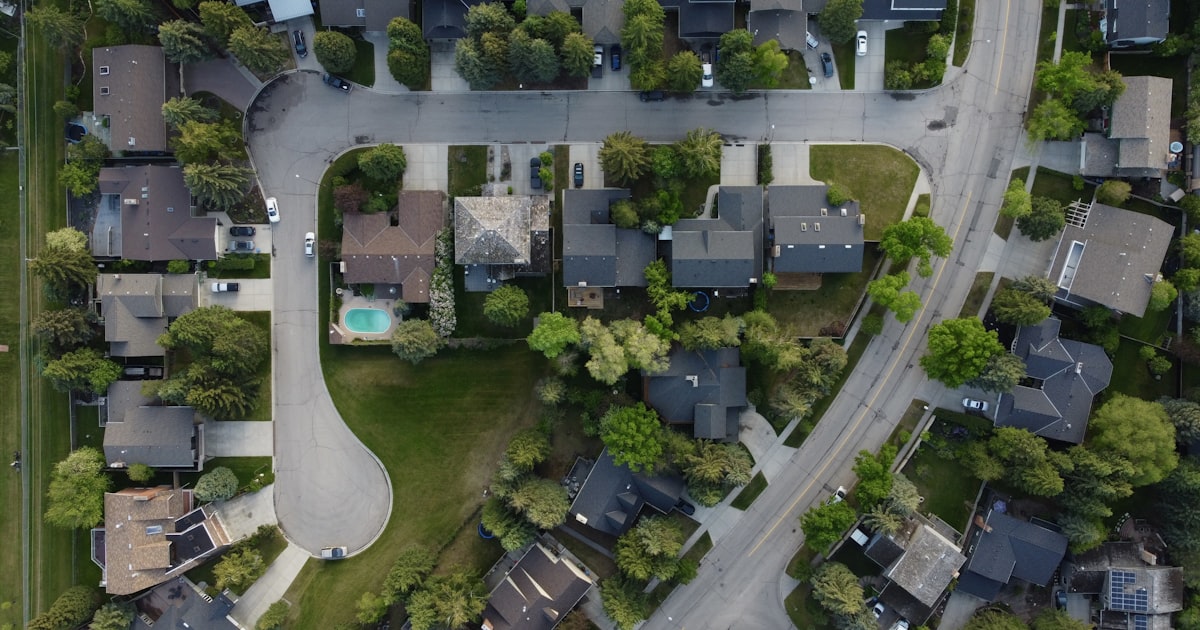
A corner lot is not automatically bad feng shui. The real issue is exposure: two streets means traffic, noise, headlights, and open sightlines on two sides instead of one. Most corner lot problems are moderate and fixable with layered screening at the exposed corner. For buyers, a corner lot alone should not stop a purchase.
If you live on a corner, you already know the feeling, even if you have never put it into words. Cars slow down, turn, and sweep their headlights across your windows after dark. People pass along two sides of your property instead of one, and some cut across the grass at the corner. From certain rooms you can hear both streets at once. The house may be bright and well kept, and it can still feel like it sits on a small stage. That feeling is not your imagination, and it is exactly what feng shui has to say about corner lots.
What a Corner Lot Actually Changes About a Home
A corner lot replaces one quiet neighbor with a second street, which roughly doubles the movement, noise, and sightlines the home has to absorb.
Think about what an interior lot gives a house for free. There is a neighbor on each side and usually a yard behind. Three of the four sides are calm, and almost everything that moves approaches from one predictable direction, the front. A corner lot removes one of those calm sides. One flank of the house now faces open pavement, moving vehicles, and anyone walking past, and the house often sits closer to the action, because most towns impose a setback from both streets, which squeezes the buildable area toward the corner.
Feng shui has pictured the well-supported home the same way for centuries: like an armchair. A solid back behind you, an armrest on each side, and an open view to the front. A corner lot trims off one armrest. The house still stands, and plenty of people live happily on corners, but one side of the chair is open where a solid arm used to be. Traditional practice calls the missing flank a loss of side support, which brings us to the actual problem.
The Real Problem: Exposure on Two Sides
The core feng shui problem with a corner lot is exposure, not bad luck. Fast movement and open sightlines on two sides can make a home harder to relax in, and that is a moderate, fixable concern for most properties.
Here is the plain, physical version before any traditional language. Traffic on two streets means sound reaching the house from two directions. Headlights from turning cars rake across the side of the house at night, often across the same one or two windows every evening, and whatever room sits behind those windows registers that movement whether or not anyone consciously notices. Pedestrians pass along two property lines, so more of the home is visible from public space. And at the corner itself, where the two streets meet, the property has a single point exposed to both streets at once, with sightlines running straight across the yard.
It is the difference between a booth at the back of a restaurant and a table at the junction of two aisles. Nothing bad happens at the aisle table. Servers pass, diners pass, and you find yourself glancing up over and over. You can eat a perfectly good meal there. You just cannot fully settle.
Only now does the traditional vocabulary earn its place. Feng shui describes fast, straight movement and long open sightlines as sha qi, often translated as attacking or cutting energy, and when a road or turning path points directly at a house, older texts call it a poison arrow. Strip away the imagery and the observation underneath is the one you just read: things that move fast toward a home, and lines of sight that run straight at it, tend to make it feel less protected. A corner lot collects more of both than a mid-block lot does.
How much more depends on the corner. A quiet residential corner is a minor concern. A corner where a collector road meets a side street, with regular turning traffic after dark, is a moderate concern. A house on the outside of a bend, where approaching headlights point at the building before the road curves away, deserves the most attention, and even that case is usually fixable rather than disqualifying.
The Upside Nobody Mentions
Corner lots also carry real advantages: more light, more air, only one direct neighbor, and often a larger or more usable yard.
Feng shui is not one-sided about corners, and neither should you be. A corner house typically gets daylight from three exposures instead of two, has one shared property line instead of two, and often comes with a larger lot and a more generous feel from the curb. In traditional terms, a corner collects active yang energy, the energy of movement, visibility, and life.
Whether that is good for you depends on the person. Someone sociable, out in the yard, happy to wave at neighbors, may thrive on a corner. Someone who comes home wanting quiet and retreat will feel the exposure more sharply. Same lot, two different verdicts, both correct.
A Worked Example
Picture a house on the northeast corner where Maple Street, running east to west, meets Third Avenue, running north to south. The front door faces south onto Maple at a bearing of about 184 degrees. The west side of the lot runs along Third Avenue for about 95 feet.
The setbacks tell the story. The house sits 27 feet back from Maple, a normal front yard, but only 14 feet from Third Avenue, because the side setback is smaller. So the west wall stands 14 feet from a street, with two windows on it, and cars turning from Third onto Maple sweep their headlights across those windows on every evening turn. From the southwest corner of the lot, where the two streets meet, you can see straight across the yard to the back fence, roughly 80 feet of open sightline.
The diagnosis takes one minute. The south face, with the front door, is normal and fine. The west flank is the exposed one: close to the street, lit by turning traffic, and open to view. The single most exposed point is the southwest corner, because both streets converge on it. That one corner is where a fix earns the most, which is exactly what the next section ranks. If you want to confirm which way your own house faces before mapping its exposed side, our free reading will work it out from it from your address.
The Fixes, Ranked
Screening the exposed corner, softening the most exposed windows, and anchoring the open flank will resolve most of what a corner lot does to a home.
Every fix below aims at the same target: interrupt the sightlines and the headlight sweep at the point where the two streets converge, so the exposed flank reads as a boundary again rather than as open ground.
Best: build a layered boundary at the exposed corner with things you already own. Cost: free. Move existing planters, a bench, large pots, or shrubs so they cluster at the corner where the two streets meet, staggered rather than in a straight row. This works because the corner is the one point exposed to both streets at once, so a visual block there interrupts the longest sightlines and the headlight path in a single move. Even a loose grouping at three to four feet changes what can be seen across the yard.
Next best: plant the corner with one or two dense evergreens. Cost: under $50. Two young evergreen shrubs, offset so they overlap from the street's viewpoint, give the same interruption permanently and improve with every season. Evergreen matters because the exposure does not take winters off.
Backup: treat the most exposed windows from the inside. Cost: under $30. Sheer curtains or frosted adhesive film on the one or two windows that catch the headlight sweep will stop the room behind them from registering movement after dark. This does not fix the yard, but it fixes the hours that matter most, the evenings, in the rooms where people actually sit.
Renter-friendly option: two or three tall potted plants along the exposed side, plus sheers on the affected windows. Nothing is planted, nothing is attached, and all of it moves out with you.
Notice what is not on this list: special mirrors, coins, or protective objects. A hedge outperforms a talisman, because the hedge changes the actual condition.
For Buyers: Should a Corner Lot Stop a Purchase?
For buyers, a corner lot is context-dependent: in most neighborhoods it is important but fixable, and it should not stop a purchase on its own.
Classify it before you weigh it. The corner itself is permanent, you cannot move the intersection. But nearly everything it does to the house, the sightlines, the headlight sweep, the sense of exposure, responds to screening, planting, and window treatment at modest cost. Permanent condition, fixable effects. That lands in the important-but-fixable column, not the walk-away column.
Do three things before making an offer. Visit at rush hour and again after dark, because traffic volume and headlight paths cannot be judged at a Sunday afternoon showing. Check how close the house sits to the side street, since a 30 foot side setback and a 10 foot one are different purchases. And look for physical room to screen, a planting strip or fence line, because the fixes above all need somewhere to stand.
The one version that deserves real hesitation is the compound case: a corner on the outside of a fast bend, with the house close to the side lot line, and no room to screen. There the exposure is high, the cures are cramped, and the condition is permanent, so it should be priced and chosen with open eyes. If the house passes, give the entrance the same care, which is covered in what your front door means in feng shui.
What Not to Worry About
Most of the frightening claims attached to corner lots are folklore, and you can safely ignore them.
A corner lot does not drain a family's wealth, and no lot shape guarantees or destroys anything. The belief that corner houses attract misfortune is mostly traditional, a leftover from places where the corner property genuinely did take the most cart traffic and the most strangers. Being visible from two streets is not a defect in itself; visibility is neutral until it reaches the rooms where you rest. A corner on two quiet residential streets barely registers as a concern at all. And if you have already lived happily on a corner for years, the label does not retroactively make your home a problem. If you are new to how this practice reasons about houses, what feng shui actually is walks through it without the mysticism, and if you are about to move into a corner home, the moving guide covers the first-week decisions that matter more than the lot shape.
One Rule Never Stands Alone
A corner lot is one condition among many, and its weight depends on everything around it: the facing direction, the traffic, the terrain behind the house, the neighboring buildings, and the people who live there. A house with a solid rise behind it, a well-placed door, and a calm side street wears its corner lightly. A house that is also below street level, facing a turning lane, and open at the back does not. No single rule should ever decide a verdict on its own, which is why judging a home means reading the whole property, not one line of it.
If you are weighing a corner house, or you already live in one and want to know how much the corner really matters for your address, enter your address and we will show you what your home's facing direction, the road geometry, and what is around it actually mean, including which conditions are permanent, which are temporary, and which are fixable. The first findings are free.
Frequently asked questions
Is a corner lot good or bad feng shui?
Neither by default. A corner lot trades protection for openness: more light, air, and space, but more noise, traffic, and exposure on a second side. On quiet streets the trade is minor. On busy streets it is a moderate concern, and it is fixable with screening at the exposed corner.
Which corner house position is best?
The most comfortable corner positions are those where the house sits well back from the side street and where turning traffic points away from the building rather than toward it. A corner on the inside of the traffic flow, with a generous side setback, feels closest to a mid-block home.
Do I need a fence for a corner lot?
Not necessarily. A full fence is one answer, but the highest-value move is smaller: a layered screen of shrubs or planters at the single corner where the two streets meet, because that point is exposed to both streets at once. Many corner homes need ten feet of screening, not two hundred.
Should I avoid buying a house on a corner lot?
A corner lot alone should not stop a purchase. Visit at rush hour and after dark, check how close the house sits to the side street, and confirm there is room to plant or screen the exposed flank. Walk away only when heavy exposure, a tight lot line, and no room for cures all stack together.
What is the cheapest fix for corner lot feng shui?
Free: cluster planters, pots, or a bench you already own at the corner where the two streets converge, staggered for height. Under $30: sheer curtains or frosted film on the windows that catch headlights. Under $50: one or two evergreen shrubs planted at the corner for a permanent screen.
Does a corner lot affect wealth in feng shui?
The belief that corner lots drain wealth is mostly traditional, and no honest reading guarantees or threatens money based on lot shape. What a corner measurably changes is exposure and rest. Address those with simple screening and the traditional concern loses its footing.