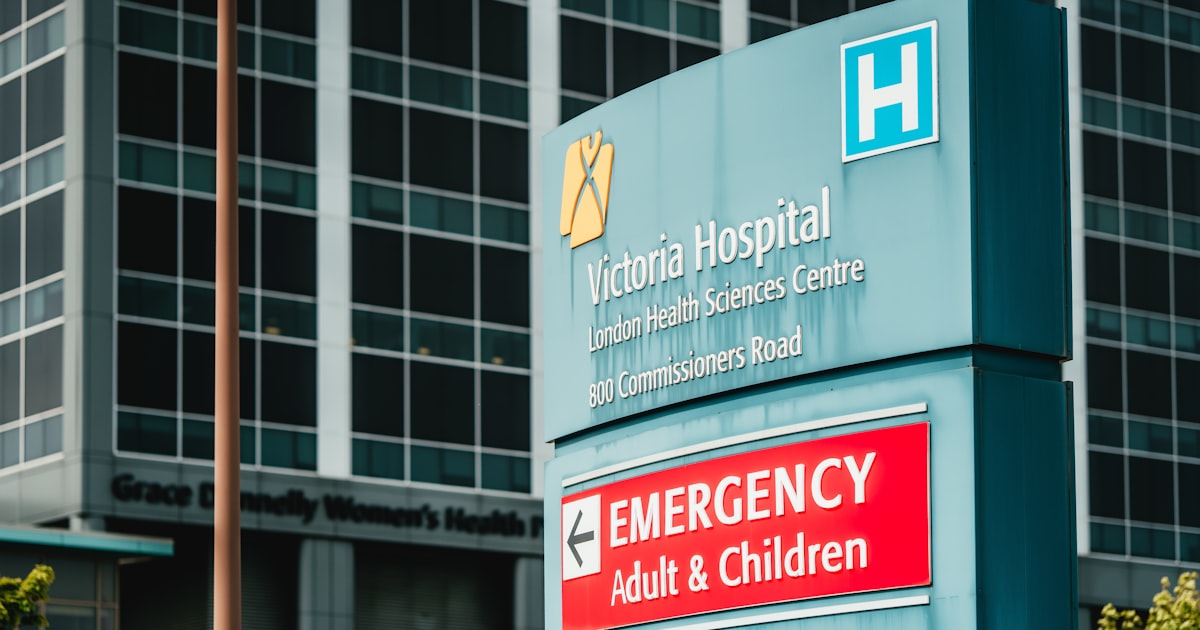
Living near a hospital, a fire station, or a cell tower is not automatically bad feng shui. What matters is distance, direction, and what the facility does to your daily experience of the home. Most homes more than a few hundred feet away are only mildly affected, and the common concerns respond well to inexpensive fixes at the property line.
You probably noticed it during a viewing, or you have lived with it long enough that it fades in and out of your attention. The ambulance that runs its siren at two in the morning. The fire station three blocks over that empties out with horns blaring during a toddler's nap. The lattice tower behind the subdivision that your eye keeps snagging on from the kitchen window. Nothing is wrong, exactly. But the house never quite feels sealed off from what is around it, and you wonder whether that low-level awareness is doing something to your family, or to the value of the home.
This article walks through what each of these three neighbors actually does to a property, how much weight each deserves, and what to do about it, whether you already live there or you are deciding whether to make an offer.
Why these three neighbors get grouped together
The common thread is that all three are sources of activity and attention that your home cannot control. A hospital, a fire station, and a cell tower each project something toward your property, and your home either absorbs it or is shielded from it.
The plain version first: your nervous system tracks what is around you, whether or not you consciously notice. A siren that can start at any hour keeps a small channel of your attention permanently open. A building where difficult things happen daily carries associations you cannot fully switch off. A tall structure looming in a sightline registers as something standing over you. None of this requires belief in anything.
Feng shui calls disruptive, cutting, or agitating influence sha qi, sometimes translated as attacking energy. The term sounds dramatic, but the observations underneath it are ordinary: noise, abruptness, visual intrusion, and heavy associations all make a home harder to relax in. A useful modern analogy is trying to rest in a train station. The benches may be comfortable and nobody is bothering you, but announcements can come at any moment, so your body never fully powers down. A home near a fire station can feel like that at a low volume, all the time.
The three facilities each project a different kind of influence, so they deserve separate readings.
The hospital: quiet, heavy, and mostly about association
A hospital near a home is traditionally read as a source of yin energy, the still and heavy end of the spectrum, because of its association with illness and grief. In practice, the modern concern is more concrete: ambulance routes, 24-hour lighting, and traffic.
Start with the practical layer, because it is the one you can measure. If your street is on the direct ambulance approach, you will hear sirens at unpredictable hours, and that is a real quality-of-life cost. If the emergency entrance faces away from you and the approach runs down a different arterial, a hospital 500 feet away can be quieter than an ordinary commercial strip.
The traditional layer is about association. Classical texts group hospitals with cemeteries and funeral homes as places where the difficult parts of life concentrate, and advise distance from them. A skeptical reader does not need to accept the energetic framing to notice the psychological version: some people simply do not enjoy seeing a hospital from their window every day, and that daily reminder has a mood cost for them. Other people, especially medical workers, feel nothing at all.
Severity: depends on the person, rising to moderate importance if you are on a siren route. The association component is mostly traditional. The noise component is real and measurable, so measure it: visit the house at night and on a weekend, and check which streets the ambulances actually use.
For buyers: context-dependent, and rarely a reason to walk away on its own. A hospital nearby is a permanent condition, you cannot fix its location, but its impact is usually minor once you are off the direct approach route. It is also worth remembering the ledger has a credit side. Proximity to emergency care is a genuine practical benefit, and homes near major hospitals often hold value because medical staff want short commutes.
The fire station: the sharpest of the three, because of abruptness
A fire station is the most disruptive of these three neighbors in feng shui terms, because its signature is sudden, loud, unpredictable activity. This is classic sha qi in its most literal form: energy that arrives fast and cuts through stillness.
The everyday experience is familiar to anyone who has lived near one. The station can sit silent for two days, then empty out at 3 a.m. with horns and light bars. It is the unpredictability, more than the volume, that costs you. A train that passes at the same time every night becomes background. A siren that might or might not happen keeps the channel open.
Direction matters here more than with the hospital. A station whose bay doors open toward your home, so that trucks accelerate in your direction, is a stronger reading than one that faces along the street and sends trucks away from you. Traditional practice treats a facility pointing at your facing direction, the side your home fronts, as heavier than the same facility behind or beside you.
Severity: moderate importance within about 500 feet or on the response route, minor concern beyond that. Note that fire stations also come with a quiet upside that surprises people: response times to your own home are excellent, and some insurers price that in.
For buyers: important but fixable in its effects, permanent in its cause. The station will not move, but sound and sightline mitigations work well against it, and the price discount on homes near stations is often larger than the lived nuisance justifies once mitigations are in. Should it stop a purchase? Usually not, unless the bedrooms face the bay doors at close range and you are a light sleeper. That specific combination is worth taking seriously.
The cell tower: almost entirely a visual and emotional reading
A cell tower's feng shui impact is about what you see, not what it transmits. It makes no noise and generates no traffic. What it does is stand there, tall, angular, and industrial, in a sightline you did not choose.
The plain-English mechanism first: tall, sharp, man-made structures looming over a home read to the eye as pressure. Feng shui formalizes this as a poison arrow, the traditional name for any sharp or pointed form aimed at a property, and treats a tower overlooking a house as a source of pressing energy, especially when it rises directly behind or directly in front of the home. Behind matters because the land behind a house is supposed to play the role of support, like the back of a solid chair. A tower back there replaces the feeling of a supportive backrest with the feeling of someone standing behind your seat.
On health: many buyers worry about radiofrequency exposure, and honesty matters more here than reassurance. Public health agencies that regulate these towers set exposure limits with wide safety margins, and exposure falls off steeply with distance. This article reads the tower the way feng shui reads it, as a visual and psychological presence. If health exposure is a concern for you, that is a research question for the relevant agencies, not something a feng shui article should settle.
Severity: minor concern in most placements, moderate importance when the tower dominates the main view or rises close behind the house. If you have to look for the tower to find it, it is not a finding.
For buyers: minor and permanent, with one exception. A tower that dominates the primary sightline from the main living space, or looms at close range behind the lot, is a resale consideration as much as a feng shui one, because a meaningful share of future buyers will discount for it. That is worth pricing into an offer. A tower visible only from one corner of the yard should not influence the decision at all.
A worked example, with the numbers shown
Take a plausible house: a single-story home on a street running east to west, with the front door facing south at roughly 185 degrees. A fire station sits 420 feet to the southeast, its two bay doors opening west, onto the same east-west street. A regional hospital is about 2,600 feet, roughly half a mile, to the north. A 150-foot lattice cell tower stands about 900 feet to the northwest on a low rise.
Reading it piece by piece. The fire station is inside the 500-foot band, so it starts as moderate importance. But its bay doors open west, along the street, not toward the house, so trucks accelerate across the home's frontage rather than at it. That softens the reading: the sirens are an acoustic issue, not a directional one. Checking the response pattern, the station's main runs go west toward the arterial, meaning trucks pass the front of the house for two to three seconds at speed. Verdict: real but mitigable, mostly a bedroom-window and glazing question.
The hospital at half a mile is beyond meaningful range, and ambulances use the north-south arterial two blocks east, not this street. Verdict: not a finding. The cell tower, 900 feet northwest, is invisible from the south-facing front rooms and appears only from one corner of the backyard, not directly behind the lot, so it does not disturb the support position. Verdict: minor concern, safe to ignore.
Net reading for this address: one moderate item, sirens crossing the frontage, and everything else noise-free. That is a buy-with-mitigations house, not a walk-away house. Notice how much of that verdict came from bearings and distances rather than from the mere presence of the three facilities. Two homes on the same block can get different verdicts.
The fixes, ranked
These cures target the fire station and hospital noise problem and the tower sightline problem. Each is ranked with a cost band, and each list ends with a renter-friendly option.
For siren and traffic noise (fire station, hospital routes):
- Best, under $50 to start: treat the bedroom windows on the exposed side. Heavy lined curtains over the affected windows blunt both the sound and the light-bar flash. Full acoustic curtains or window inserts cost more but this is where each dollar works hardest, because the problem is worst when you are asleep.
- Next best, free: rearrange sleeping positions within each room so beds sit against interior walls, away from the exposed side, with a solid wall behind the headboard. This is the same command-position logic covered in bed placement, applied defensively.
- Backup, under $30: a small white-noise machine in each bedroom raises the floor of background sound so sirens spike less sharply against silence. Not elegant, but effective, and the first thing many hospital-adjacent households actually buy.
- Renter-friendly: all three of the above are renter-friendly. Nothing here touches the structure.
For a tower or building in a sightline:
- Best, free to under $50 per plant: plant for the sightline, not the property line. Stand at the window where the tower bothers you, find the exact bearing, and place one or two fast-growing evergreens on that line in the yard. A tree 20 feet from your window blocks more sky than a hedge 100 feet away at the fence.
- Next best, under $50: reframe the window. A sheer top panel, a valance, or repositioned furniture that turns the main seating away from that view removes the daily reminder without any landscaping.
- Backup, under $30: traditional practice hangs a small convex mirror or bagua mirror facing the offending structure to symbolically deflect it. This is mostly traditional, it changes nothing physical, but some households find the ritual of answering the problem genuinely settling.
- Renter-friendly: a tall potted plant, bamboo or a columnar evergreen in a planter, placed on the sightline at the window or balcony.
What not to worry about
Most of the fear attached to these three neighbors does not survive contact with the details. A hospital or fire station you can reach in two minutes but cannot hear from your bedroom is a net positive, not a hazard. A cell tower you only see when you look for it is not a finding. A siren you hear twice a week, faintly, from inside the house is ordinary urban background, not sha qi. Facilities beyond about a quarter mile, off your sightlines and off the response routes, can be dropped from the analysis entirely. And no single one of these, at any distance, is the kind of condition that poisons an otherwise well-sited home. Feng shui weighs the whole property, and a house with a solid support position, a well-oriented facing direction, and a calm immediate frontage carries a distant siren easily.
One rule never decides a house
This is the part generic articles skip. A fire station 400 feet away means one thing for a house whose bedrooms face it and another for a house that turns its back to it. The reading depends on your facing direction, the road geometry between you and the facility, what else surrounds the lot, the elevation, and the people in the house, a night-shift nurse and a light-sleeping infant do not weigh a siren the same way. Judging the property by the tower alone is like judging a restaurant by one seat near the kitchen door. Personal fit matters too: your Kua number shapes which facing directions suit you, which changes how the same surroundings read for different households.
If you live near one of these facilities, or you are weighing an offer on a house that does, this is exactly the situation a property-specific reading is for. Enter the address and we will show you what the home's facing direction, the road geometry, and what is around it actually mean, including whether a concern like this one is permanent, temporary, or fixable at that specific property. The first findings are free. For buyers, five minutes with the address before you make the offer beats a month of second-guessing after closing, and it pairs well with the broader checks in what to verify before moving into a new home.
Frequently asked questions
Is it bad feng shui to live near a hospital?
Not automatically. The traditional concern is the heavy association with illness, but in practice the impact depends on distance, sightlines, and whether your street carries ambulance traffic. Beyond a few hundred feet and off the siren routes, a hospital is a minor factor, and the practical benefit of nearby emergency care is real.
How close is too close to a fire station?
Within about 500 feet, or anywhere on the direct response route, expect real noise disruption and treat it as a moderate concern. Beyond that, most households adapt quickly. The worst case is bedrooms facing the bay doors at close range; the best case is the station facing away from you on a street the trucks do not use.
Do cell towers affect feng shui?
Only visually. A tower is read as a source of pressing, sharp energy when it looms in a main sightline or rises directly behind a house, where support should be. A tower you barely see has no meaningful reading. Screening the sightline with a well-placed tree or reframing the window resolves most cases.
Should I buy a house near a hospital or fire station?
Usually yes, if the rest of the property checks out and you have visited at night to hear the real noise level. These homes often sell at a discount larger than the lived nuisance, especially once bedroom windows are treated. Walk away only if bedrooms face the source at close range and sleep is fragile in your household.
Does a bagua mirror really work against a cell tower?
It changes nothing physical, which is why this article ranks it as a backup and labels it mostly traditional. Physical screening, a tree or planting on the exact sightline, does more. Some households still find the traditional cure settling, and at under $30 it is a harmless addition, not a substitute.
Will living near a fire station hurt my home's resale value?
It can, modestly, because some future buyers will discount for it, and the same is true of a highly visible cell tower. That is a reason to negotiate the price when buying, not necessarily a reason to avoid the house. Hospital proximity often supports value because medical staff want short commutes.