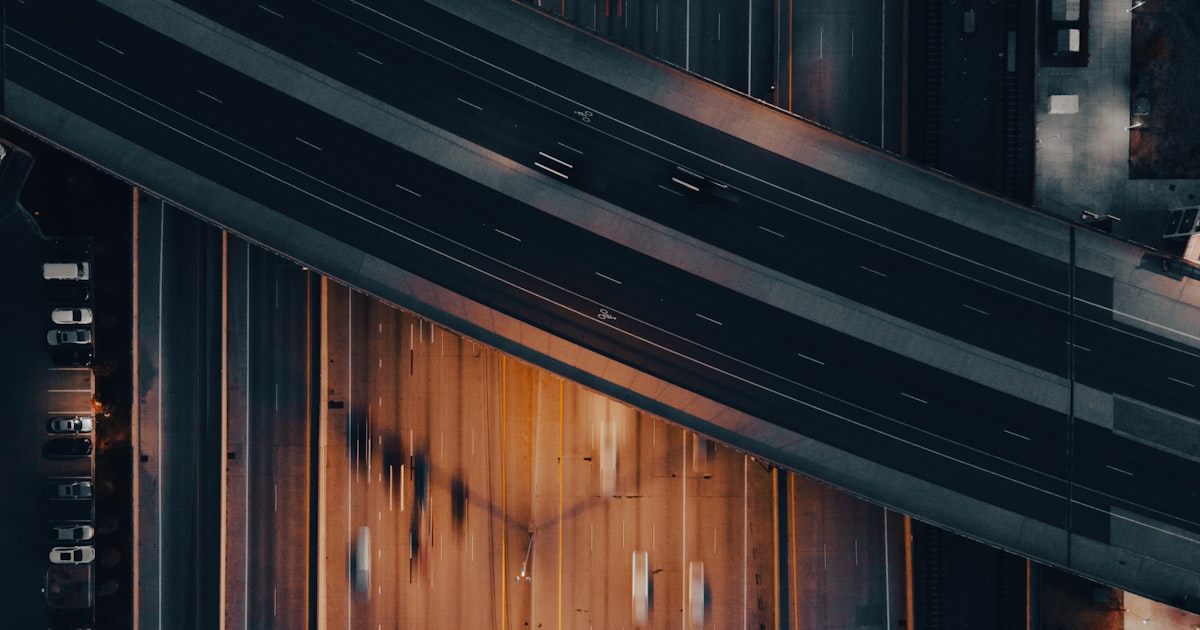
A house backing onto a highway or busy road is considered weak feng shui because the rear of a home is supposed to provide stillness and support, and fast traffic replaces that stillness with constant movement and noise. It is a permanent condition, but its impact can be meaningfully reduced with buffering, screening, and interior adjustments.
You probably did not need an article to tell you something was off. You may have stood in the backyard on a quiet evening and noticed that it never actually gets quiet. There is a low, steady wash of tire noise that rises and falls but never stops. At night, headlights sweep across the back fence. When friends visit, you catch yourself talking slightly louder on the patio without deciding to. The house itself may be lovely. The street out front may be calm. But the back of the property, the side that is supposed to feel private and protected, always has something rushing past it.
That everyday experience is exactly what feng shui is describing when it warns about roads behind a house. Before we get to any traditional language, it helps to understand the physical situation on its own terms.
What a highway behind the house actually does
The core problem with a highway behind a house is that it removes the sense of a protected back, which is the single thing the rear of a property is supposed to provide. In feng shui, this condition is moderate to high importance depending on distance, elevation, and buffering, and it is one of the few location factors that people can physically hear and feel rather than merely believe in.
Think of a home the way you would think of a chair. A good chair has a solid back. You lean into it without checking whether it will hold. A stool with no back can hold you just as well, but you never fully relax on it, because part of your attention stays on your own balance. Traditional feng shui asks the land behind a house to act like the back of that chair: higher ground, mature trees, other houses, anything stable and still. A highway does the opposite. It replaces the chair back with a moving walkway. Nothing back there is still, and some part of the household's attention never fully switches off.
Feng shui has a name for the influence of fast, straight movement near a home. It is called sha qi, often translated as rushing or cutting energy. Strip away the terminology and the observation is practical: fast, linear movement past a fixed point creates noise, vibration, air disturbance, and a feeling of exposure, and living things generally do not settle right next to it. The classical schools also describe the ideal rear support as the black tortoise, a still, solid presence behind the home. A six-lane road is close to the exact inversion of that image.
None of this requires belief in any tradition. The tradition simply noticed the pattern early and built rules around it.
How serious is it? The three factors that decide
The seriousness of a road behind a house depends on three measurable things: how far away the traffic is, whether the road sits above or below your lot, and what stands between the two. The label can range from high importance to minor concern on those factors alone.
Distance. Under roughly 150 feet from the rear of the house to the traffic lanes, with nothing substantial between, the condition is high importance. The noise and light are part of daily life in the rear rooms. Between about 150 and 500 feet, it is moderate importance, real but manageable. Beyond 500 feet with any screening at all, it usually drops to a minor concern.
Elevation. A highway that sits below your lot, in a cutting or down a slope, is significantly gentler than one at your level or above you. Sound travels upward and outward from the road surface, so a home looking down on traffic from 15 or 20 feet of elevation often hears half of what a level neighbor hears. A raised highway on an embankment or overpass behind a house is the hardest version, because the traffic is both audible and visually above the home, which adds a feeling of being overlooked.
Buffer. A continuous sound wall, a dense tree line, or a row of intervening buildings changes the reading substantially. An open chain-link fence changes almost nothing. The question is not whether something stands between the house and the road, but whether that something is solid and continuous.
A useful honesty check: stand at the back door with your eyes closed. If the traffic is a faint wash you have to listen for, the concern is mostly traditional. If you can hear individual vehicles, it is practical and current.
A worked example
Consider a plausible house so the reasoning is visible. A single-family home in a suburban subdivision faces southeast at about 140 degrees onto a quiet residential loop. Behind it, the lot runs 110 feet from the back wall of the house to the rear fence. Beyond the fence there is a 60 foot grass easement, and then a four-lane highway running northeast to southwest, so the traffic crosses behind the house at a diagonal rather than aiming at it. Total distance from the back wall to the near traffic lane is about 190 feet. The lot sits roughly 10 feet above the road grade, and the easement holds a broken line of young trees.
Reading this property: the diagonal angle is good, because a road that runs past at an angle is gentler than one pointing directly at the house. The 190 foot distance and the 10 foot elevation advantage both help. The weak point is the buffer, because young trees with gaps do not block sound or headlights. This house lands at moderate importance. The rear rooms will register the highway at night and in early morning, and the backyard will never be fully quiet, but the condition is workable, and the fixes below would move it noticeably. The same house at road grade, 80 feet from the lanes, with a bare fence, would be a high importance reading and would justify a harder look before purchase.
If you are not sure which way a house faces or how a road runs relative to it, our free reading works the facing direction out from the address and the road the property fronts.
For buyers: should this stop the purchase?
For a buyer, a highway behind a house is best classified as important but partially fixable, and context-dependent. The traffic itself is permanent, since no owner can move a highway, but the home's exposure to it can be reduced enough that many households live comfortably with the condition.
The direct answer: this should not automatically stop a purchase, but it should affect what you pay and how carefully you inspect. Homes backing onto major roads typically trade at a discount to identical homes on interior lots, and that discount is your compensation for accepting a permanent condition. If the discount is not there, the market is asking you to pay interior-lot money for a highway lot, and you can reasonably walk away or negotiate.
Before making an offer, visit at three times: a weekday around 7 to 8 a.m., a weekday evening, and late at night. Traffic noise is a rhythm, not a constant, and a Sunday afternoon showing tells you almost nothing about a Tuesday commute. Stand in the backyard for ten full minutes each visit. Also check whether the sound wall situation could change, because a highway scheduled for widening behaves very differently from one that is stable.
Buyers weighing several concerns at once may find our guide to what feng shui actually evaluates useful for sorting which factors are structural and which are cosmetic.
The fixes, ranked
Every version of this problem has cures, and they stack, so doing two or three together matters more than any single one. Each fix below carries a cost band, and the renter options require no permission from a landlord.
Best: rebuild the sense of a solid back at the boundary. The goal is a continuous visual screen along the rear line, because a back you cannot see through reads as protection even before it blocks a single decibel. Free version: move existing large planters, storage boxes, or garden structures into an unbroken line along the rear fence, closing the gaps. Under $30: plant two or three fast-growing evergreen shrubs at the largest sightline gaps, choosing species that hold foliage in winter. Over a few seasons, a staggered double row becomes a genuine buffer. This is the fix that addresses the condition itself rather than the symptoms.
Next best: treat the rear-facing windows. Sound and light both enter through glass far more than through walls. Under $30: a weatherstripping and gap-seal kit for the rear windows, which cuts the high-frequency edge of tire noise more than most people expect. Under $50: heavy lined curtains on the rear windows, closed at night, which soften both the remaining noise and the headlight sweep. This pair is also the strongest renter-friendly option, since both install and remove without a trace.
Backup: rearrange the interior so rest happens away from the exposure. Free: place beds and main seating against solid interior walls rather than against the rear wall, whatever rooms those happen to be in your home, so the most restful positions in the house have mass between them and the road. Under $30: a small white noise machine in whichever room is used for sleep on the highway side, which replaces an irregular noise with a steady one the brain can ignore. Our guide to bed placement covers the supporting principles.
One thing to note honestly: the fixes reduce the condition, they do not erase it. A highway lot with excellent buffering becomes a good home with one managed weakness, not an interior lot.
What not to worry about
Not every road behind a house is a problem, and overreacting to this rule wastes money and peace of mind. A quiet residential street behind your fence is not a highway, and the rule barely applies to it. Occasional traffic is simply life in a neighborhood. You also do not need mirrors, crystals, or any purchased object marketed as a highway cure, because the mechanisms that matter here are distance, mass, and screening, and a small object on a windowsill provides none of them. If the traffic is far enough away that you only notice it when you listen for it, you can file this issue as mostly traditional and spend your attention on the parts of the home you actually feel. And if your house is near a busy road at the front rather than the back, that is a different and generally milder reading, because the front of a home is expected to face activity. Our article on the front door covers that side of the property.
One rule is never the whole house
A highway behind a house should never be judged on its own. Its real weight depends on the rest of the property: which way the house faces, how the land rises or falls, what else surrounds the lot, and how the home matches the people living in it. A home with strong facing directions for its household, good elevation, and a solid buffer can carry a rear road lightly. A home with several exposures stacked together deserves more caution. The rule is one input, and the property is the answer.
That is exactly what a full reading is for. Enter your address and we will show you what your home's facing direction, the road geometry, and what is around it actually mean, for this house and the people in it. If you are weighing an offer, check the address before you sign, and find out whether this concern is permanent, temporary, or fixable at that specific property. The first findings are free.
Frequently asked questions
Is it bad feng shui to live near a highway?
Living near a highway is traditionally read as weak feng shui, especially when the highway runs behind the house, because the rear of a home is supposed to provide quiet support. The severity depends on distance, elevation, and buffering, and ranges from a serious concern to a minor one.
How far from a highway is far enough in feng shui?
There is no single official distance, but as a practical guide, under about 150 feet with no buffer is a high concern, 150 to 500 feet is moderate, and beyond 500 feet with screening is usually minor. Elevation and a solid sound wall can shift each of those bands considerably.
Can you fix the feng shui of a house that backs onto a busy road?
You can meaningfully improve it, though not erase it. The most effective approach is a continuous evergreen screen along the rear boundary, combined with sealed and curtained rear windows and beds placed against solid interior walls. The fixes stack, and most cost under $50 each.
Should I buy a house that backs onto a highway?
It depends on price, exposure, and your own sensitivity to noise. The condition is permanent but partially fixable, so it should be reflected in the purchase price rather than treated as an automatic dealbreaker. Visit at commute hours and late at night before deciding.
Does a sound wall change the feng shui reading?
Yes, substantially. A continuous solid wall between the house and the traffic restores much of the stillness the rear of the home needs, in both the practical and the traditional reading. A gap in the wall directly behind the house, however, concentrates the exposure at that point.
Is a house above a highway better than one below it?
Generally yes. A home sitting above the road grade hears less noise and regains a feeling of overlooking rather than being overlooked. A home sitting below an elevated highway has the harder version of the condition and needs stronger buffering to compensate.